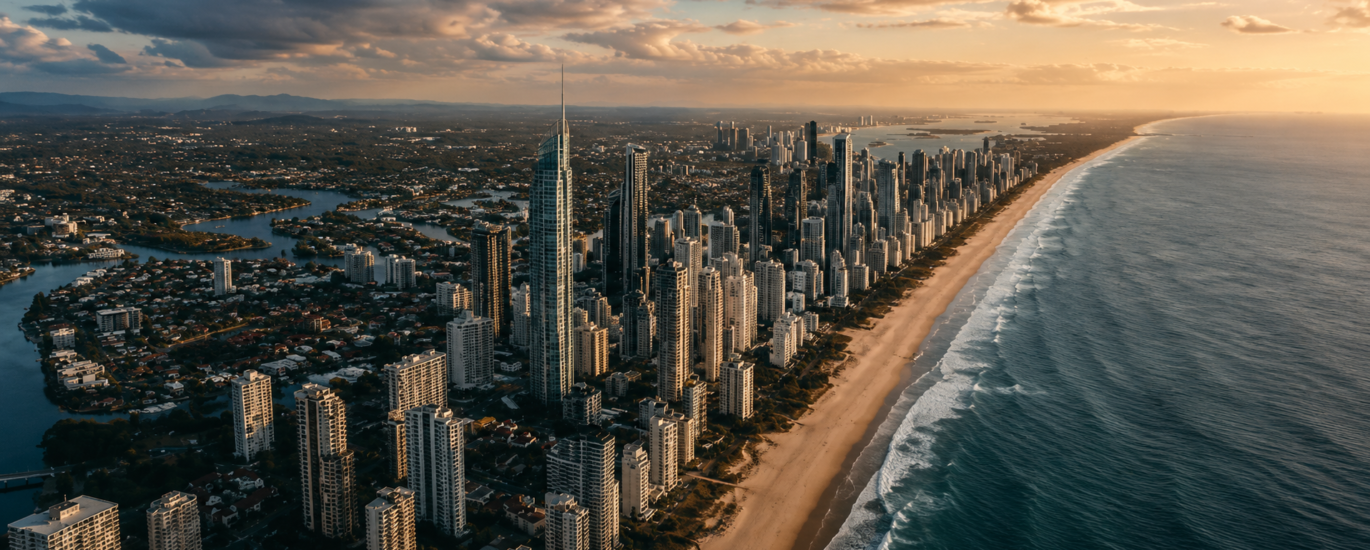
Gold Coast, Queensland, is one of the most recognisable names in Australian tourism, lifestyle, and increasingly, real estate investment. Stretching along 57 kilometres of Queensland’s coastline south of Brisbane, the Gold Coast is Australia’s sixth-largest city and the second-largest in Queensland. With more than 300 sunny days per year, a booming economy, world-class universities, and a property market that has defied expectations for five consecutive years, the Gold Coast in 2026 is no longer simply a holiday destination — it is a fully realised metropolis that competes with Sydney and Melbourne for talent, investment, and global recognition.
Whether you are planning a visit, considering a move, or scouting for property investment opportunities, this comprehensive guide covers everything you need to know about the Gold Coast in 2026.
A Brief Overview of Gold Coast
The Gold Coast sits in the southeastern corner of Queensland, bordered by the Pacific Ocean to the east, the scenic Scenic Rim hinterland to the west, Brisbane to the north, and the New South Wales border to the south. Its population has grown to well over 700,000 residents, with roughly 15,000 new people settling in the region every year driven largely by interstate migration from Sydney and Melbourne and a growing international community seeking a lifestyle upgrade.
The city’s economy is diverse, with key pillars in tourism, education, health services, construction, and technology. The Gold Coast Airport, which now handles direct international flights, processed record passenger numbers in late 2025, and visitor numbers show no signs of slowing. The city hosted the 2018 Commonwealth Games, which catalysed billions in infrastructure investment — a legacy that continues to shape the city’s urban landscape to this day.
Top Attractions in Gold Coast
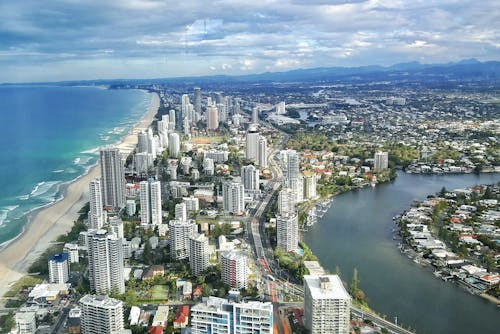
Gold Coast offers an extraordinary range of attractions that cater to every kind of traveller or resident. From the iconic golden beaches to lush national parks, the variety is genuinely remarkable.
Surfers Paradise Beach
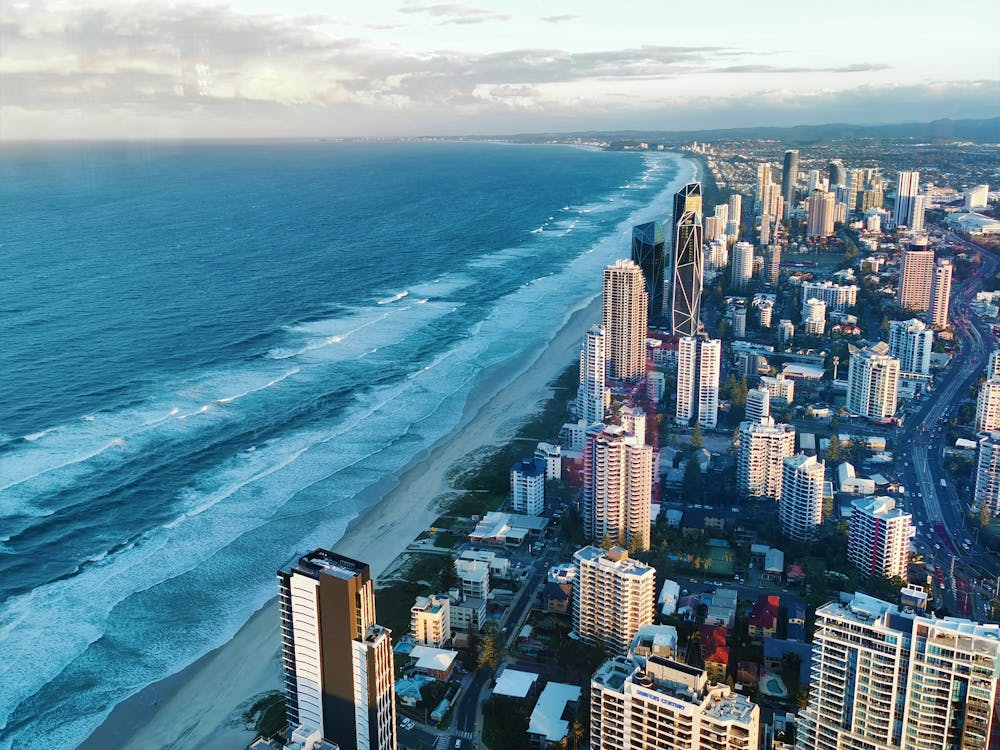
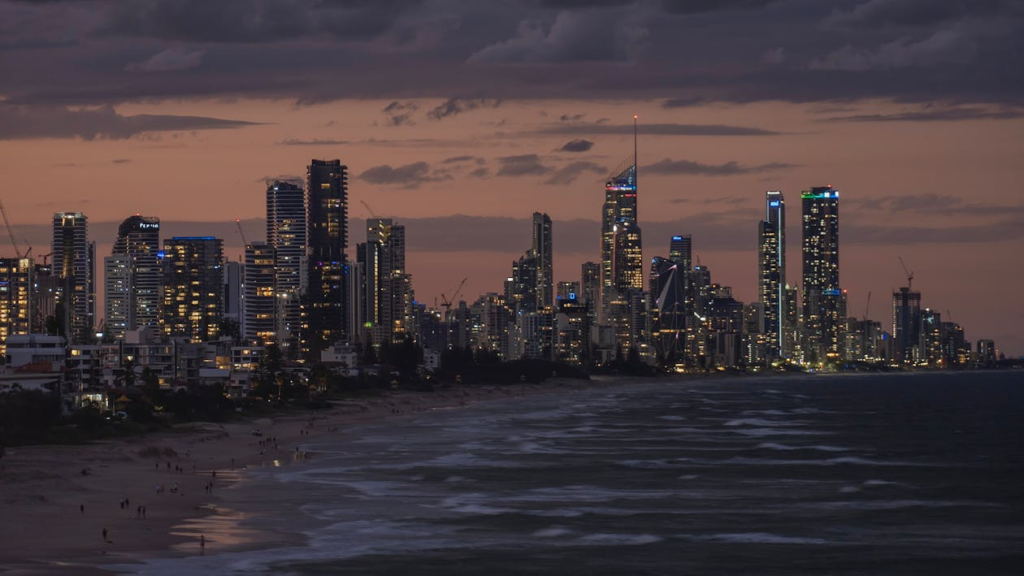
Surfers Paradise is perhaps the most globally recognised suburb in Australia after Sydney’s Bondi Beach. Its iconic golden strip of sand, backed by a glittering high-rise skyline, draws millions of visitors annually. The Surfers Paradise foreshore precinct is lined with restaurants, bars, surf schools, and boutique shops along Cavill Avenue, and the beach itself is patrolled year-round. It is a hub for water sports, sunbathing, and vibrant nightlife, set just 20 minutes from Gold Coast Airport.
SkyPoint Observation Deck
Perched 230 metres above street level on the 77th floor of the Q1 tower, SkyPoint Observation Deck is the only observation deck on the entire eastern Australian coastline. The elevator whisks visitors to the top in just 43 seconds. From up here, you get a 360-degree view stretching north to Brisbane, south to Byron Bay in New South Wales, east across the Pacific Ocean, and west into the Gold Coast hinterland. There is also a bar lounge and a weather station on-site.
Dreamworld
Located in Coomera, Dreamworld is Australia’s largest theme park, offering more than 40 rides, wildlife encounters, and family-friendly entertainment spread across its expansive grounds. It continues to draw families from across Australia and increasingly from overseas tourism circuits.
Warner Bros. Movie World
Warner Bros. Movie World offers a world of superhero-themed entertainment, delivering rides, live entertainment, and themed experiences tied to iconic Warner Bros. franchises. In 2026, the park has undergone exciting new expansions, adding next-generation rides and enhanced immersive experiences.
Sea World
Sea World combines marine life education with thrilling rides, featuring dolphins, polar bears, stingrays, penguins, and sharks in world-class exhibits. The park also offers helicopter tours and was expanded in 2026 with new attractions.
Currumbin Wildlife Sanctuary
One of the most beloved attractions on the Gold Coast, Currumbin Wildlife Sanctuary is managed by the National Trust of Australia (Queensland) and offers close encounters with native Australian wildlife including koalas, kangaroos, saltwater crocodiles, and lorikeets. It is consistently voted among the Gold Coast’s most popular destinations.
Tamborine Mountain and the Hinterland
Just 45 minutes inland from the coast, the Gold Coast Hinterland offers waterfalls, rainforest walks, art galleries, cheese factories, and wine-tasting at Tamborine Mountain. The contrast between the coast and the lush green hinterland is one of the city’s most underappreciated qualities.
Coolangatta and Kirra Beach
Gold Coast’s southernmost coastal suburb, Coolangatta, is a relaxed alternative to the busier northern precincts. Its sandy beaches, including Kirra Beach and Rainbow Bay, are legendary among surfers. Every June, the suburb hosts Cooly Rocks On, Australia’s largest nostalgia festival, celebrating the music and lifestyle of the 1950s, 60s, and 70s.
Whale Watching
Between June and November, the waters off the Gold Coast become part of the annual humpback whale migration, known as the “humpback whale highway.” Guided whale-watching cruises operating from Main Beach and surrounding areas offer some of the most memorable wildlife encounters in Australia, with guaranteed sightings during peak season. In 2026, new exclusive whale swim tours have also been introduced for adventurous travellers.
Hot Air Balloon Rides
For early risers, a hot air balloon ride over the Gold Coast at sunrise offers an unrivalled perspective of the coastline, hinterland, and the sprawling cityscape below. Several operators offer this experience departing from the northern and western suburbs.
Universities and Education
The Gold Coast has evolved into a significant education hub, attracting students from across Australia and internationally. The city is home to several major institutions offering world-class undergraduate, postgraduate, and research programs.
| University | Location | Notable For |
|---|---|---|
| Griffith University (Gold Coast Campus) | Southport / Robina | Health, Law, Business, Arts, Environment |
| Bond University | Robina | Law, Business, Medicine, private university |
| Southern Cross University (Gold Coast) | Bilinga | Nursing, Education, Business, Environmental Science |
| TAFE Queensland Gold Coast | Multiple campuses | Vocational, Technical, and Applied Training |
Griffith University
Griffith University’s Gold Coast campus is one of the largest university campuses in Queensland, spanning sites at Southport and Robina. It offers degrees across health sciences, law, business, engineering, arts, and environmental science. Griffith is consistently ranked among Australia’s top universities and is a significant contributor to the Gold Coast’s economy and research ecosystem.
Bond University
Bond University, located in Robina, is Australia’s first private not-for-profit university and one of the most internationally recognised. It is particularly celebrated for its law and business faculties and operates on a tri-semester model that allows students to complete degrees faster than at most other institutions. Bond is a neighbour to Varsity Lakes, making that suburb especially popular with students and young professionals.
Southern Cross University
Southern Cross University’s Gold Coast campus, located at Bilinga near the airport, offers programs in nursing, education, business, and environmental science, with a growing international student community drawn by its coastal location and applied-learning focus.
Key Suburbs of the Gold Coast
The Gold Coast is a patchwork of diverse suburbs, each with a distinct character and appeal. Understanding the differences between them is essential for visitors, residents, and investors alike.
| Suburb | Character | Known For |
|---|---|---|
| Surfers Paradise | Vibrant, urban | Nightlife, beaches, tourism |
| Broadbeach | Cosmopolitan, walkable | Dining, Pacific Fair, casino |
| Burleigh Heads | Trendy, bohemian | Cafes, surf culture, National Park |
| Main Beach | Prestige, quiet | Marina, luxury living |
| Hope Island | Exclusive, waterfront | Golf resorts, canal living |
| Robina | Family-friendly | Town Centre, Bond University |
| Varsity Lakes | Education-driven | Schools, lakeside lifestyle |
| Coolangatta | Laid-back, coastal | Classic surf beaches, festivals |
| Coomera | Growth corridor | Theme parks, new development |
| Southport | CBD, commercial | Griffith University, hospital precinct |
Broadbeach is widely regarded as the most walkable suburb on the Gold Coast, with the Pacific Fair shopping centre (housing over 300 retailers), The Oasis shopping complex, the Gold Coast Convention and Exhibition Centre, Star Casino, and direct light rail connectivity all concentrated within easy walking distance. Burleigh Heads, meanwhile, has emerged as a sophisticated lifestyle suburb with high-quality dining, boutique retailers, a national park headland, and a surf culture that has made it enormously popular with young professionals and interstate migrants seeking an alternative to the more commercial northern precincts.
Real Estate Market Overview 2026
The Gold Coast property market in 2026 represents one of the most compelling real estate stories in Australian history. After years of being dismissed as a boom-and-bust holiday market, the city has fundamentally changed its character, and the numbers support that transformation.
Current Median Prices
According to the latest data from Cotality (formerly CoreLogic) and Domain as of early 2026:
| Property Type | Median Price | Annual Growth | 5-Year Growth |
|---|---|---|---|
| Houses (overall Gold Coast) | $1.17 million – $1.65 million | 8–12% | ~100% |
| Units (overall Gold Coast) | $836,000+ | 5–10% | ~80% |
| Surfers Paradise / Bundall region (houses) | $2,252,500 | 17.7% | Significant |
| Broadbeach–Burleigh region (houses) | $2,100,000 – $2,167,388 | 13.5% | Significant |
| Burleigh Waters (houses) | $1,600,000 – $1,650,000 | 11.5% | 98.8% |
| Mermaid Waters (houses) | $1,850,000 | Steady | Strong |
| Broadbeach Waters (houses) | $2,526,500 | Strong | Significant |
The data reveals that lifestyle-led Gold Coast precincts have firmly crossed into prestige territory. The Surfers Paradise region, spanning Surfers Paradise, Bundall, Benowa, Main Beach, and Chevron Island, posted the strongest national price increase in a recent 90-day window according to Domain’s House Price Report, surging by $339,500 — a 17.7% jump — cementing its status as a true prestige market. On the same coastline, the Broadbeach–Burleigh area recorded a $250,000 gain over the same period, representing a 13.5% rise.
Rental Market
The rental market on the Gold Coast remains extraordinarily tight, with vacancy rates sitting well below 2% and in many pockets under 1%. Median weekly rents across the city sit around $920, with prestige coastal suburbs commanding significantly more.
| Suburb | Median Weekly House Rent | Gross Yield (Houses) | Gross Yield (Units) |
|---|---|---|---|
| Broadbeach Waters | $1,390 per week | ~2.7% | ~4.2% |
| Burleigh Waters | $1,098 per week | ~3.5% | ~4.8% |
| Mermaid Waters | $1,200 per week | 3.2% | 4.1% |
| Overall Gold Coast (units) | ~$920 per week | ~4.1% | ~5.3% |
Units have outpaced houses on a percentage yield basis, with gross yields for units sitting around 5.3% compared to roughly 4.1% for houses — a notable spread that is drawing investors toward the apartment market, particularly in suburbs like Broadbeach, Miami, and Burleigh Heads.
Supply Constraints
The single most powerful structural driver of Gold Coast property prices is the severe and worsening imbalance between housing supply and population demand. The Property Council of Australia has flagged that new apartment completions on the Gold Coast could fall from 1,900 units in 2025 to just 1,400 in 2026, with only approximately 50 units relatively certain to be delivered in 2027. This is against a backdrop of a South East Queensland Regional Plan that requires approximately 4,500 new dwellings per year to meet demand. The city is delivering a fraction of that target.
Coastal land is effectively fully developed. New development approvals face significant delays from planning bottlenecks and soaring construction costs. Queensland dwelling approvals are running approximately 5% below the five-year average. Meanwhile, population growth continues at roughly 15,000 people per year.
Price Growth Forecasts
While growth is expected to moderate from the extraordinary double-digit surges of 2023 and 2024, forecasters are broadly optimistic:
| Forecaster / Source | 2026 Growth Forecast |
|---|---|
| CoreLogic | 4–7% |
| Australian Property Experts | 7–11% |
| Bamboo Routes | 5–9% |
| Binnari Property Research | 5–10% |
The consensus points to continued, steady growth underpinned by population inflows, tight supply, and strong rental demand — with units in coastal suburbs potentially outperforming at the higher end of these ranges.
Suburbs to Watch in 2026
For investors and buyers seeking value alongside growth potential, several suburbs stand out in 2026:
| Suburb | Median Price | Annual Growth | Why It Stands Out |
|---|---|---|---|
| Coomera / Pimpama | ~$750,000–$900,000 | Strong % growth | Affordable family living, Light Rail expansion |
| Ashmore | ~$900,000 | 9.2% | Undervalued, elevated, near amenities |
| Jacobs Well | $1,174,000 | 17.4% | Waterfront village, hidden gem |
| Helensvale | ~$950,000 | Strong | Infrastructure, theme parks, accessibility |
| Palm Beach | ~$1,500,000 | Steady | Coastal charm, gentrification trend |
Infrastructure Driving Property Values
Several infrastructure projects are actively boosting buyer confidence and property values across the city:
The Gold Coast Light Rail Stage 3 extension to Burleigh Heads, expected mid-2026, is already driving elevated property demand along the southern coastal corridor from Broadbeach to Palm Beach. The Coomera Connector, a major road project linking northern Gold Coast to Brisbane, is boosting property appeal in the northern growth corridor. The Main Beach marina and residential redevelopment is midway through a significant transformation that is reshaping that suburb’s long-term value proposition. Gold Coast Airport’s ongoing international expansion continues to put the city on the global map for both tourism and direct business investment.
Cost of Living
The Gold Coast offers relative value compared to Sydney and Melbourne, though rising prices have placed pressure on first-home buyers and those on modest incomes. The price per square metre for property now sits around AUD $5,500 to $6,500, with units in premium coastal locations often costing more per square metre than freestanding houses due to scarcity of land.
Day-to-day living costs — groceries, dining, transport, and utilities — are broadly in line with Brisbane and somewhat below Sydney and Melbourne. The city’s outdoor lifestyle also means many of its best recreational activities, from beach swimming to national park hiking, are entirely free.
Transport and Getting Around
The Gold Coast has invested heavily in public transport in recent years. The G:link light rail (tram) system runs along the coastal strip from Helensvale in the north to Broadbeach in the south, with the Stage 3 extension to Burleigh Heads expected to open mid-2026. Bus services connect the broader metropolitan area, and Translink’s integrated ticketing system covers trains, buses, and light rail.
Gold Coast Airport at Coolangatta handles both domestic and direct international flights, with services to Asia and the Pacific expanding in 2025 and 2026. Brisbane Airport, approximately one hour to the north, serves as the primary international gateway for the region.
Climate
The Gold Coast enjoys a subtropical climate with warm to hot summers and mild, dry winters. Temperatures average around 20–29 degrees Celsius year-round, and the city receives approximately 300 sunny days per year — a figure that has made it synonymous with outdoor living. Summers can bring heavy rainfall and the occasional severe storm, but the climate is generally one of the most appealing in Australia for outdoor enthusiasts.
Lifestyle and Culture
The Gold Coast has undergone a cultural renaissance over the past decade. Once dismissed as a glitzy tourist strip with little depth, the city now boasts a sophisticated dining scene anchored by Broadbeach, Burleigh Heads, and Palm Beach. James Street in Burleigh Heads has become the Gold Coast’s answer to Melbourne’s Fitzroy or Sydney’s Surry Hills — a walkable precinct packed with independent cafes, boutiques, surf brands, and casual dining restaurants.
The city also hosts major annual events that draw visitors from across the country and beyond: the Magic Millions Horse Racing Carnival in January, Blues on Broadbeach in May, the Gold Coast 500 Supercars Championship, whale watching tours from June through November, and spectacular Christmas and New Year fireworks over the ocean.
The arts scene is growing, with the Home of the Arts (HOTA) cultural precinct in Surfers Paradise hosting world-class exhibitions, live music, and performances throughout the year. The Gold Coast’s multicultural population — drawn from across Australia and the world — has enriched the city’s food, festivals, and community culture considerably.
Healthcare
The Gold Coast University Hospital, opened in 2013, is one of the largest hospitals in Queensland and a major teaching hospital affiliated with Griffith University. It anchors a broader health precinct in Southport that also includes the Gold Coast Private Hospital. The city’s healthcare infrastructure has grown substantially in line with its population, and the health and medical sector is now one of the Gold Coast’s largest employers.
The Gold Coast in 2026 is a city that has grown into its potential. Where once it was seen purely through the lens of bikinis, beaches, and theme parks, it is now rightly understood as a sophisticated, economically diverse, and rapidly maturing metropolitan centre. Its property market has delivered extraordinary returns over the past five years and continues to outperform many other Australian markets, backed by structural supply shortages, population growth, and world-class liveability.
For visitors, it offers an embarrassment of riches — from hinterland rainforests and wildlife sanctuaries to world-famous surf beaches and the best theme park precinct in the southern hemisphere. For students, its universities offer globally recognised qualifications in a lifestyle setting that few cities in the world can match. And for those considering making the Gold Coast their home or investment destination, the fundamentals in 2026 remain as compelling as they have ever been.
The Gold Coast is not just Australia’s favourite holiday destination anymore. It is, by every meaningful measure, one of Australia’s greatest cities.