
If you have spent any time scrolling through finance or pop-culture corners of the internet, you have probably come across whispers of the McGold Card — a mysterious, metallic gold card said to grant its holder free McDonald’s meals for life. It sounds like an urban legend. Warren Buffett has one. So does Bill Gates. A handful of celebrities claim to have owned one too. But is it real? And more importantly, what can everyday Australians actually learn from this quirky piece of fast-food folklore?
At True Wealth Management, we love stories that connect everyday culture to bigger lessons about money, value, and long-term thinking. The McGold Card is a perfect example — a strange little symbol that says a lot about how the world’s wealthiest people actually think about spending, value, and simplicity. Let’s break down exactly what it is, who has one, what it is really worth, and the financial lessons hidden inside the legend.
What Exactly Is the McGold Card?
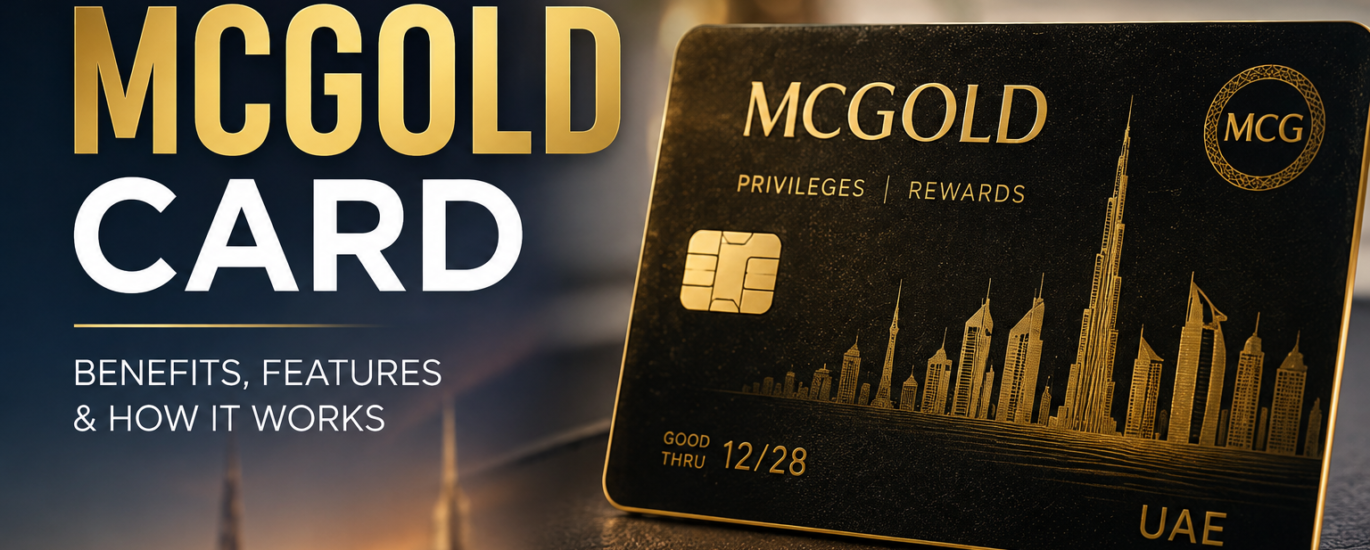
The McGold Card (also called the McDonald’s Gold Card) is a credit-card-sized, gold-coloured card that entitles the holder to free food at McDonald’s — sometimes for a set number of years, and in rarer cases, for life. Unlike a standard loyalty card that everyone can apply for, the McGold Card is not something you can simply sign up for at your local Macca’s. Historically, it has been handed out personally by McDonald’s corporate executives or individual franchise owners as a gift, rather than sold or issued through any official program.
The terms of each card vary significantly depending on who issued it. Some cards can be used at any McDonald’s location in the world. Others are restricted to a specific city, region, or even a single restaurant. Some are valid for a lifetime, while others are valid for a fixed period, such as 50 years.
The Origins of the McGold Card
The tradition is believed to trace back to McDonald’s founder Ray Kroc, who was known to hand out lifetime “Be Our Guest” cards to close friends and business associates as a personal gesture rather than a corporate reward. Over the decades, that informal habit evolved into what is now known across McDonald’s folklore as the Gold Card.
McDonald’s has never officially confirmed how many of these cards exist in total, which has only added to the mystique surrounding them.
Who Actually Has One?
While McDonald’s keeps official numbers under wraps, a small number of high-profile individuals have publicly confirmed owning a McGold Card, including:
- Warren Buffett — the world-famous investor revealed in a 2007 interview that his card allows him to eat free at any McDonald’s in his hometown of Omaha, Nebraska, for life.
- Bill Gates — the Microsoft co-founder later confirmed he also holds a card, and his version reportedly works at any McDonald’s location worldwide.
- Rob Lowe — the actor received a regional card valid in Santa Barbara and Goleta, California, gifted to him by the son of the man who invented the Egg McMuffin. His card expired in 2016.
- A small number of other long-time McDonald’s associates, media personalities and franchise-connected individuals have also been linked to the card over the years.
Interestingly, two of the wealthiest people on the planet, Buffett and Gates, are among the card’s most famous holders — a detail that says a great deal about how genuinely wealthy people often view money and value, which we will come back to shortly.
Has McDonald’s Ever Given the Public a Chance to Win One?
Yes. In December 2022, McDonald’s ran a promotion in the United States called the “SZN of Sharing,” giving members of the public a shot at winning their own McGold Card through the McDonald’s mobile app. Customers who placed an order through the app during the promotional period were automatically entered into the draw, and there was also a no-purchase-necessary entry option.
Winners received a McGold Card entitling them to two free meals per week for 50 years — working out to roughly 5,200 free meals over the life of the card. McDonald’s reportedly valued the total prize (including a cash payment to help cover tax on the winnings) at close to US$74,000, or roughly AU$110,000–$115,000 at recent exchange rates. It is worth noting this promotion was run through the US McDonald’s app, and there has been no confirmed equivalent nationwide contest run by McDonald’s Australia to date.
Is the McGold Card Really “Free Money”?
This is where the story becomes genuinely interesting from a financial planning perspective. On the surface, a card that gives you thousands of dollars of free food sounds like an incredible windfall. But when you actually run the numbers, the picture looks a little different.
McDonald’s itself valued the 50-year McGold Card prize at roughly US$1,040 per year. Spread out over a year, that is a relatively modest amount — around US$20 per week, or the cost of a couple of takeaway meals. In other words, the value of the card is real, but it is not the life-changing fortune the mythology suggests. It is a steady, modest, long-term perk — not a jackpot.
That distinction is exactly why this story resonates with us as wealth advisers. It is a useful metaphor for something we see constantly in financial planning: people chase dramatic, headline-grabbing windfalls (a lottery win, a hot stock tip, a “guaranteed” high return investment) while overlooking the quiet, compounding value of consistent, modest, well-managed financial habits over decades.
The Real Lesson for Australians: Value Over Time Beats Flash
Warren Buffett is famous not just for being one of the richest people in the world, but for his remarkably simple, unpretentious lifestyle. He still lives in the same modest house he bought in 1958, drives an ordinary car, and by his own admission, rarely even uses his free McDonald’s card, preferring to actually pay for his meal most of the time. Bill Gates has said the same thing about his own card.
That is a powerful message for Australians navigating today’s cost-of-living pressures, rising interest rates, and an increasingly complex investment landscape: genuine wealth is rarely about flashy perks or one-off windfalls. It is built through:
- Consistency over time — small, steady contributions to superannuation, investments, or savings compound far more powerfully than most people expect.
- Living below your means — even some of the world’s wealthiest individuals choose simplicity and restraint rather than excess.
- Understanding real value, not headline value — just as the McGold Card’s “for life” mythology sounds bigger than its actual annual worth, many financial products marketed to Australians (timeshares, high-fee investment schemes, “guaranteed return” offers) sound far more valuable than they actually are once you do the maths.
- Long-term thinking — a 50-year card is a long-term asset. So is a well-structured superannuation strategy, a diversified investment portfolio, or a properly funded self-managed super fund (SMSF). The payoff is not instant, but it compounds.
Applying the McGold Card Mindset to Your Own Financial Plan
You are unlikely to ever receive a call from McDonald’s offering you free food for the next five decades. But you can absolutely apply the same underlying principle to your own finances here in Australia:
- Audit the “perks” in your own financial life. Many Australians are sitting on unused loyalty points, forgotten superannuation accounts, insurance policies with duplicate cover, or investment fees that quietly eat away at long-term returns. A proper financial health check can uncover real, ongoing value that is easy to overlook.
- Focus on decades, not days. Whether it is superannuation, property, or shares, the biggest wins in personal finance come from time in the market and consistency, not timing the market or chasing the next big thing.
- Separate marketing from mathematics. Just as the McGold Card’s mythology outpaced its actual annual value, plenty of financial products are marketed with more sizzle than substance. Always ask what something is genuinely worth per year, not just how good it sounds as a headline.
- Get a second opinion from a professional. Whether you are planning for retirement, comparing superannuation funds, structuring an SMSF, or simply trying to make your money work harder over the long term, working with qualified, independent advisers can make the difference between a plan that sounds good and one that actually delivers.
Final Thoughts
The McGold Card is a fun piece of corporate folklore, but underneath the fast-food mythology is a genuinely useful reminder about how real wealth is built: quietly, consistently, and over a long period of time, not through flashy one-off windfalls. Warren Buffett did not become one of the world’s richest investors because he had free access to Big Macs. He built his fortune through decades of disciplined, patient, well-informed decision-making, the same principles that underpin sound financial planning in Australia today.
If you would like guidance building a long-term financial strategy that actually compounds, from superannuation and investment structuring to retirement planning, our team offers trusted wealth management in Australia tailored to your goals, your risk profile, and your stage of life. Real wealth is not about a golden card. It is about a solid plan.