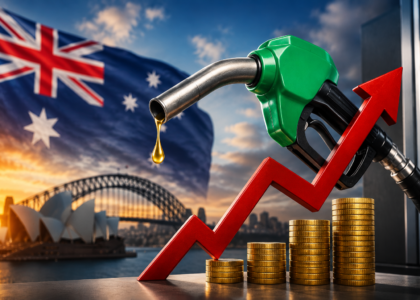


Australia is one of the wealthiest nations on earth, yet millions of its residents are struggling to pay their bills, afford rent, put food on the table, and keep up with everyday expenses. The cost of living crisis that began building in 2022 has deepened through 2024 and into 2025 and 2026, squeezing households across every income bracket — but hitting low and middle-income earners the hardest.
In this comprehensive guide, we examine exactly what is driving Australia’s cost of living crisis, who is being affected and how, what the data tells us, what governments have done in response, and — most importantly — what practical steps you can take to protect your financial wellbeing.
What Is the Cost of Living Crisis?
The cost of living crisis refers to a sustained period where the prices of essential goods and services — housing, food, energy, healthcare, and transport — rise significantly faster than wages and incomes. The result is that households have less real purchasing power: your dollar buys less than it used to.
In Australia’s case, this crisis has been driven by a combination of post-pandemic supply chain disruptions, global inflation, domestic energy market failures, an ongoing housing shortage, and interest rate hikes by the Reserve Bank of Australia (RBA) that were the most aggressive in a generation.
Key Statistics: How Bad Is It?
| Indicator | Data |
|---|---|
| Peak CPI Inflation | 7.8% (December 2022 quarter — highest in 32 years) |
| CPI as of late 2025 | ~3.2% (declining but still above RBA target) |
| RBA Cash Rate (Peak) | 4.35% (held from Nov 2023 into 2024) |
| Mortgage Repayment Increase (avg) | $1,500+ per month since 2022 rate rises began |
| Rental Price Growth (2023–2025) | 15–25% in major cities |
| Food Price Inflation (peak) | ~9% year-on-year |
| Electricity Price Increase | 20–30% in many states (2023–2024) |
| Real Wage Growth | Negative for most of 2022–2023; only slightly recovering in 2024–2025 |
| Household Savings Rate | Fallen from 19.8% (2021) to below 3% (2024–2025) |
| Australians in Financial Stress | Over 3 million households (ANZ/Roy Morgan data) |
These numbers tell a stark story. Australians are spending their savings, cutting discretionary spending, and in many cases falling behind on essential bills for the first time in their lives.
What Is Causing the Cost of Living Crisis in Australia?
The crisis is not the result of one single cause. It is the product of multiple overlapping forces — some global, some uniquely Australian.
1. Post-Pandemic Inflation
When Australia and the world emerged from COVID-19 lockdowns in 2021–2022, a massive surge in consumer demand collided with severely disrupted global supply chains. Goods that had been unavailable during the pandemic were suddenly in high demand, but production and shipping capacity had not recovered. Prices spiked across virtually every category — from cars and electronics to furniture and clothing.
2. Global Energy Price Shock
Russia’s invasion of Ukraine in February 2022 triggered a global energy crisis. Natural gas prices surged worldwide. Australia, despite being one of the world’s largest gas exporters, paradoxically experienced significant domestic energy price increases because much of its gas production is locked into long-term export contracts. Electricity prices, which in many states are closely linked to gas prices, rose sharply as a result.
3. RBA Interest Rate Rises
To combat inflation, the Reserve Bank of Australia lifted its cash rate from a record low of 0.10% in May 2022 to 4.35% by November 2023 — a total increase of 4.25 percentage points in just 18 months. This was the most aggressive rate-hiking cycle in Australia in over three decades.
The impact on mortgage holders was severe and immediate:
| Loan Size | Monthly Repayment (0.10%) | Monthly Repayment (4.35%) | Monthly Increase |
|---|---|---|---|
| $400,000 | ~$1,517 | ~$2,226 | +$709 |
| $600,000 | ~$2,276 | ~$3,339 | +$1,063 |
| $800,000 | ~$3,034 | ~$4,452 | +$1,418 |
| $1,000,000 | ~$3,793 | ~$5,565 | +$1,772 |
Hundreds of thousands of Australians who had borrowed at record-low rates during the pandemic suddenly found their repayments unmanageable.
4. The Housing Crisis
Australia’s housing shortage is a structural problem that has been decades in the making. A lack of supply — driven by planning restrictions, slow development approvals, high construction costs, and insufficient investment in social and affordable housing — has collided with strong population growth driven by record immigration post-pandemic.
The result: rents have surged to record highs in almost every Australian city and regional area. Vacancy rates have fallen to historic lows. And Australia’s Housing Market has become one of the most expensive and unaffordable in the world, with Sydney and Melbourne consistently ranking among the least affordable cities globally on a price-to-income ratio basis.
5. Food Price Inflation
Grocery prices in Australia rose sharply through 2022 and 2023, driven by:
- Global commodity price increases (wheat, cooking oil, dairy)
- Domestic weather events (flooding in NSW and Queensland damaged crops)
- Supply chain disruptions increasing logistics costs
- Supermarket market concentration (Coles and Woolworths together control ~65% of the grocery market)
While food inflation has moderated somewhat, prices have not fallen back to pre-crisis levels — they have simply stopped rising as fast.
6. Insurance Premiums
Home, car, contents, and health insurance premiums have surged. This is partly driven by:
- More frequent and severe weather events (floods, bushfires) increasing insurer claims
- Rising construction and repair costs
- Global reinsurance market pressures
- Some insurers withdrawing from high-risk areas entirely
For many households, insurance premiums have risen 20–40% over two to three years.
7. Childcare Costs
Despite government subsidies, childcare remains one of the biggest household expenses for families with young children. Full-time childcare in a major Australian city can cost $150–$250 per day per child, with out-of-pocket costs after the Child Care Subsidy (CCS) often reaching $15,000–$25,000 per year per child for middle-income families.
8. Healthcare Costs
The gap between what Medicare pays and what doctors and specialists charge has widened. Out-of-pocket healthcare costs — including dental (which is not covered by Medicare), specialist visits, pathology, radiology, and private health insurance premiums — have risen substantially. Private health insurance premiums have increased every year, with cumulative increases well above CPI over the past decade.
Who Is Being Hit Hardest?
While no Australian household has been immune to the cost of living crisis, certain groups have been disproportionately affected.
| Group | Key Pressures |
|---|---|
| Renters | Rent increases of 15–25%+, low vacancy rates, insecurity of tenure |
| Mortgage holders | Repayment increases of $700–$1,800/month since 2022 |
| Low-income earners | Higher share of income spent on essentials (food, energy, transport) |
| Single-parent families | Limited income + high childcare costs |
| Older Australians on fixed incomes | Rising healthcare costs + insufficient pension indexation |
| Young Australians (18–35) | Locked out of housing market, high rent, HECS debt |
| Regional Australians | Higher transport and energy costs, less competition |
| Recent immigrants | Often in casual work, facing rental discrimination, limited safety net access |
The Housing Rental Crisis in Detail
The rental crisis sits at the very centre of Australia’s cost of living emergency. Nationally, median rents have increased by roughly 20–30% since 2020. In some cities and regional areas, the increases have been even more dramatic.
| City | Median Weekly Rent (2020) | Median Weekly Rent (2025 Est.) | Increase |
|---|---|---|---|
| Sydney | ~$520 (house) | ~$700–$750 | +35–40% |
| Melbourne | ~$420 (house) | ~$580–$620 | +38–48% |
| Brisbane | ~$390 (house) | ~$620–$650 | +59–67% |
| Perth | ~$380 (house) | ~$650–$700 | +71–84% |
| Adelaide | ~$360 (house) | ~$570–$600 | +58–67% |
| Hobart | ~$430 (house) | ~$560–$590 | +30–37% |
The national rental vacancy rate has hovered below 1.5% in most cities — well below the 3% typically considered a balanced rental market. In this environment, landlords have had enormous power to increase rents, and tenants have had very little leverage.
For renters, housing now consumes 30–50% or more of their gross income in major cities — well above the traditional 30% affordability benchmark.
Energy Bills: The Electricity and Gas Crisis
Energy affordability has become a serious issue for Australian households and small businesses. Electricity prices rose sharply in 2022 and 2023, and while some government relief measures (energy bill rebates) have provided short-term assistance, underlying prices remain elevated.
| State | Average Annual Electricity Bill (2020) | Average Annual Electricity Bill (2025 Est.) | Increase |
|---|---|---|---|
| NSW | ~$1,400 | ~$1,900–$2,100 | +36–50% |
| VIC | ~$1,300 | ~$1,700–$1,900 | +31–46% |
| QLD | ~$1,250 | ~$1,600–$1,800 | +28–44% |
| SA | ~$1,700 | ~$2,200–$2,500 | +29–47% |
| WA | ~$1,200 | ~$1,500–$1,700 | +25–42% |
South Australia consistently has among the highest electricity prices in the world on a per-kilowatt-hour basis, driven by its high share of renewable energy combined with insufficient grid storage infrastructure.
Grocery Prices: The Supermarket Squeeze
Australians have seen the price of everyday grocery staples rise dramatically. The following table illustrates typical price increases for common items:
| Grocery Item | Approximate Price (2020) | Approximate Price (2025) | Increase |
|---|---|---|---|
| Bread (700g loaf) | $3.00 – $3.50 | $4.00 – $5.00 | +33–43% |
| Full cream milk (2L) | $2.00 – $2.50 | $2.80 – $3.60 | +40–44% |
| Cheddar cheese (500g) | $5.00 – $6.00 | $7.00 – $9.00 | +40–50% |
| Chicken breast (1kg) | $8.00 – $10.00 | $12.00 – $16.00 | +50–60% |
| Eggs (12 pack) | $4.00 – $5.00 | $6.00 – $8.50 | +50–70% |
| Olive oil (750ml) | $6.00 – $8.00 | $12.00 – $18.00 | +100–125% |
| Butter (500g) | $4.00 – $5.00 | $6.50 – $8.50 | +63–70% |
| Pasta (500g) | $1.00 – $1.50 | $1.80 – $2.50 | +80–67% |
| Petrol (per litre, unleaded) | $1.20 – $1.35 | $1.80 – $2.10 | +50–56% |
Olive oil deserves special mention — global supply shocks caused by drought in Mediterranean producing regions led to extraordinary price increases that have only partially reversed.
Real Wages: The Purchasing Power Problem
A central feature of the cost of living crisis is that wages have not kept pace with inflation. When prices rise faster than incomes, workers experience a reduction in real purchasing power — effectively a pay cut.
| Year | Wage Price Index Growth (Australia) | CPI Inflation | Real Wage Change |
|---|---|---|---|
| 2020 | +1.4% | +0.9% | +0.5% |
| 2021 | +2.3% | +3.5% | -1.2% |
| 2022 | +3.1% | +7.8% | -4.7% |
| 2023 | +4.1% | +5.4% | -1.3% |
| 2024 | +4.2% | +3.5% | +0.7% |
| 2025 (est.) | +3.8% | ~3.0% | +0.8% |
Australian workers experienced negative real wage growth for the better part of two years (2021–2023), meaning that even employees who received pay rises were actually earning less in real terms. The recovery in real wages in 2024–2025 has been modest and has not compensated for the cumulative losses of the preceding years.
Government Response: What Has Been Done?
Both the federal government and state governments have introduced various measures to ease cost of living pressures. Results have been mixed.
| Policy / Initiative | Description | Assessment |
|---|---|---|
| Energy Bill Relief Fund | Federal/state rebates of $300–$500 for eligible households | Short-term relief only; doesn’t address structural energy costs |
| Rent Assistance Increases | Commonwealth Rent Assistance lifted 10% in 2023, 10% in 2024 | Widely seen as insufficient given rental price growth |
| Stage 3 Tax Cuts (revised) | Delivered larger cuts to low/middle earners from July 2024 | Provided meaningful income relief for many households |
| Cheaper Child Care | CCS subsidy increased; more families getting higher subsidy rates | Meaningful for families but childcare still expensive |
| Housing Australia Future Fund | $10B fund to build 30,000 social/affordable homes over 5 years | Criticised as too small and too slow relative to the scale of need |
| National Housing Accord | Target of 1.2 million new homes by 2029 | Ambitious; most experts say delivery is at significant risk |
| Medicare Urgent Care Clinics | Bulk-billing urgent care clinics to reduce GP pressure | Positive but limited reach so far |
| Minimum Wage Increases | Fair Work Commission delivered above-inflation increases in 2023 and 2024 | Helped lowest-paid workers but didn’t fully close real wage gap |
The broad consensus among economists and welfare organisations is that government responses have provided useful but insufficient relief, and have not addressed the deeper structural issues — particularly in housing supply — that are driving the crisis.
The Psychological and Social Toll
The cost of living crisis is not just a financial problem — it is a health and social crisis. Research from organisations including the Australian Institute of Health and Welfare, Beyond Blue, and various university studies has documented significant increases in:
- Financial stress and anxiety
- Relationship breakdown and family conflict related to money
- Mental health presentations (depression, anxiety) linked to housing insecurity
- Reduced preventive healthcare visits due to cost
- Increased use of food banks and community meals services
- Young people delaying or abandoning plans for home ownership, marriage, and children
- Older Australians choosing between medication and food
Food bank usage in Australia has reached record levels, with organisations like Foodbank Australia reporting that they are serving significantly more Australians than ever before — and increasingly, those Australians are employed, not unemployed.
What Can You Do? Practical Strategies to Manage the Cost of Living Crisis
While systemic change must come from policy, there are meaningful steps individuals and households can take to improve their financial resilience.
1. Audit Your Expenses Ruthlessly
Start with a full picture of where your money is going. Categorise every expense — housing, food, utilities, subscriptions, insurance, transport, dining, entertainment. You cannot fix what you cannot see. Apps like Frollo, Pocketbook, or your bank’s built-in tools can automate much of this.
2. Switch Energy Providers
Australia’s energy retail market is competitive in most states. Using comparison tools like Energy Made Easy (federal government) or your state equivalent can identify significantly cheaper deals. Many households are overpaying simply through inertia. Consider time-of-use tariffs if your household can shift usage to off-peak hours.
3. Refinance Your Mortgage
If you have not reviewed your home loan in the past 12–18 months, you may be paying a loyalty tax. Lenders routinely offer better rates to new customers than to existing ones. Refinancing — even within the same bank — can save thousands per year. Use a mortgage broker to compare options.
4. Review Insurance
Insurance premiums have risen sharply, but so has competition for good customers. Shop around annually. Bundling policies (home and car with the same insurer) often yields discounts. Consider raising excess amounts to lower premiums where your savings can cover a higher excess.
5. Reduce Grocery Costs Without Sacrificing Nutrition
- Plan meals for the week before shopping
- Buy home brand / private label products (often identical quality to branded items)
- Buy meat, bread, and produce in bulk and freeze
- Use the supermarket’s “reduced to clear” sections
- Consider markets for fresh produce
- Reduce food waste — the average Australian household wastes roughly $2,000–$3,000 in food annually
6. Maximise Government Entitlements
Many Australians are not claiming all the benefits they are entitled to. Check your eligibility for:
- Commonwealth Rent Assistance
- Family Tax Benefit (Parts A and B)
- Child Care Subsidy
- JobSeeker supplements
- Energy concessions and rebates (state-specific)
- Seniors Card discounts
- Health Care Card concessions
7. Build an Emergency Fund
Even in tough times, priority number one is building a buffer. Aim for three to six months of essential expenses in an accessible high-interest savings account. This prevents a car breakdown or medical bill from cascading into serious debt.
8. Address High-Interest Debt
Credit card debt and buy-now-pay-later balances are financial anchors in a high interest rate environment. Focus extra payments on the highest-rate debt first (avalanche method) or the smallest balance first if you need psychological momentum (snowball method). Consider a balance transfer to a 0% introductory rate card if eligible.
9. Invest in Energy Efficiency
Government rebates for solar panels, battery storage, heat pump hot water systems, and insulation are available in most states. The upfront cost may be manageable with financing, and the ongoing savings on energy bills can be substantial. Solar panels typically pay for themselves in 4–7 years under current conditions.
10. Upskill and Increase Your Income
The most powerful long-term lever is increasing your earning capacity. Free and low-cost courses through TAFE, universities open learning platforms, and industry bodies can help you qualify for higher-paying roles. Consider whether a side income — freelancing, consulting, rental income — is feasible for your situation.
Cost of Living by City: A Comparison
| City | Average Monthly Rent (2BR apt) | Average Monthly Grocery (couple) | Monthly Utilities | Monthly Transport | Estimated Monthly Total (excl. mortgage) |
|---|---|---|---|---|---|
| Sydney | $3,200 – $3,800 | $700 – $900 | $200 – $280 | $200 – $250 | $4,300 – $5,230 |
| Melbourne | $2,600 – $3,200 | $650 – $850 | $180 – $260 | $180 – $220 | $3,610 – $4,530 |
| Brisbane | $2,500 – $3,100 | $620 – $820 | $190 – $270 | $160 – $200 | $3,470 – $4,390 |
| Perth | $2,600 – $3,200 | $620 – $820 | $170 – $250 | $150 – $200 | $3,540 – $4,470 |
| Adelaide | $2,000 – $2,600 | $600 – $800 | $210 – $290 | $140 – $180 | $2,950 – $3,870 |
| Hobart | $2,100 – $2,700 | $620 – $800 | $200 – $280 | $120 – $160 | $3,040 – $3,940 |
| Darwin | $2,000 – $2,600 | $700 – $900 | $230 – $320 | $150 – $190 | $3,080 – $4,010 |
| Canberra | $2,400 – $3,000 | $650 – $850 | $190 – $270 | $160 – $200 | $3,400 – $4,320 |
Sydney remains comfortably the most expensive city in Australia, though Brisbane and Perth have closed the gap considerably over the past three years.
Is the Crisis Easing?
There are cautious signs of improvement heading into 2026:
- Inflation has declined from its peak of 7.8% to around 3% range
- The RBA began cutting interest rates in early 2025, providing some mortgage relief
- Real wages have returned to modest positive growth
- Energy rebates have provided temporary bill relief
- The labour market remains relatively strong
However, the structural issues — particularly housing supply, the concentration of the grocery market, and insurance affordability — remain largely unresolved. Many households that spent their savings buffer during the crisis years are now rebuilding from a very low base. And for renters, there is little meaningful relief on the horizon without a fundamental shift in housing supply.
The Housing Market Connection
It is impossible to discuss the cost of living crisis without understanding its deep connection to property. For renters, the inability to enter Australia’s Housing Market traps them in a rental market where costs continue to rise and security of tenure is minimal. For buyers who entered the market at peak prices with maximum borrowing, rate rises have delivered a severe financial shock. And for those completely priced out of ownership in major cities, the prospect of building long-term wealth through property — historically the primary vehicle for Australian household wealth creation — has become increasingly remote.
Addressing the cost of living crisis in any lasting way ultimately requires addressing the housing crisis at its core — through increased supply, planning reform, and meaningful investment in affordable housing at scale.
Australia’s cost of living crisis is real, deep, and not yet resolved. It has been caused by a convergence of global and domestic forces — inflation, energy price shocks, a broken housing market, aggressive interest rate rises, and wage stagnation — that have combined to create genuine hardship for millions of Australians.
While the worst of the inflation surge appears to be behind us, the legacy of the crisis — depleted savings, record household debt levels, a generation locked out of homeownership, and entrenched rental unaffordability — will take years to fully unwind.
For individuals, the path forward requires financial discipline, ruthless prioritisation, and a proactive approach to managing expenses, debt, and income. For policymakers, it requires the courage to tackle the structural issues — above all, housing supply — that short-term relief measures have repeatedly failed to address.
If you are navigating financial pressure as a result of the cost of living crisis, speaking to a qualified financial adviser can help you develop a clear plan to protect your household finances and build long-term resilience.