
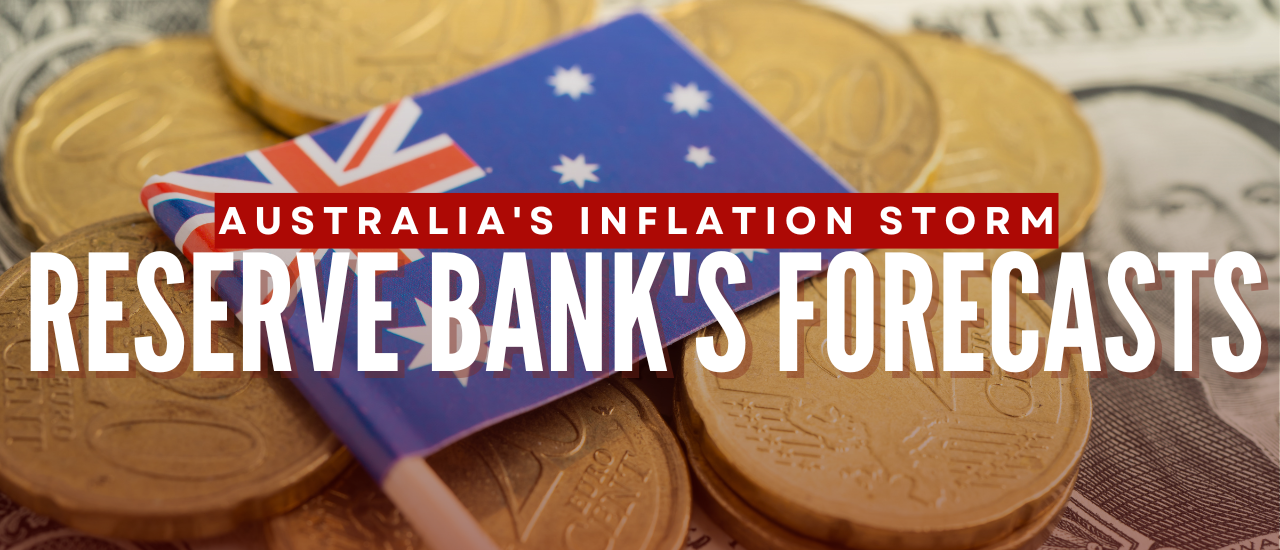
Australia’s workers are facing a financial reckoning that few saw coming just 18 months ago. After a period of cautious optimism — when inflation appeared to be cooling and the Reserve Bank of Australia (RBA) delivered three successive rate cuts in 2025 — the economic tide has turned sharply. Underlying inflation has surged back above the RBA’s target band, real wages are shrinking in purchasing power terms, and the central bank has responded by raising interest rates once again. For ordinary Australians in work, the squeeze is not just uncomfortable — it may deepen further before it eases.
Understanding what is happening, why it is happening, and what it means for your financial position is essential. This is exactly where wealth management in australia becomes critical to navigating the years ahead.
The Inflation Reversal: From Relief to Renewed Pressure
For much of 2024 and early 2025, the inflationary environment in Australia appeared to be stabilising. Headline Consumer Price Index (CPI) inflation fell from its peak of 8.4% in December 2022 to just 2.4% by March 2025, sitting comfortably within the RBA’s target band of 2–3%.
The relief, however, did not last.
The second half of 2025 brought a material reversal. By the December quarter of 2025, headline inflation had climbed to 3.6% year-on-year, exceeding the top of the RBA’s target range. Underlying inflation — the RBA’s preferred measure, known as trimmed mean inflation — rose to 3.4% annually, up from 3.2% in the November reading and well above target.
More alarming still is where the RBA now expects inflation to go. According to its February 2026 Statement on Monetary Policy, underlying inflation is projected to peak at 3.7% in mid-2026, while headline inflation is forecast to reach 4.2% — a level not seen since the post-COVID inflation crisis. The RBA does not expect underlying inflation to return within its 2–3% band until early 2027, and to settle near the midpoint only by mid-2028.
Key Inflation Data at a Glance
| Indicator | Value | Period |
|---|---|---|
| Peak CPI (post-COVID) | 8.4% | December 2022 |
| CPI Headline (low point) | 2.4% | March 2025 |
| CPI Headline | 3.2% | September Quarter 2025 |
| CPI Headline | 3.6% | December Quarter 2025 |
| CPI Monthly (ABS) | 3.7% | February 2026 |
| Trimmed Mean Inflation (underlying) | 3.3% | Year to December 2025 |
| Underlying Inflation Forecast Peak | 3.7% | Mid-2026 |
| Headline Inflation Forecast Peak | 4.2% | Mid-2026 |
| Expected Return to Target Band | Early 2027 | RBA Forecast |
| RBA Cash Rate (current) | 4.10% | April 2026 |
| RBA 2–3% Target Band | 2–3% | Ongoing mandate |
What Is Driving Inflation Back Up?
The resurgence of inflation is not being driven by a single factor — it reflects a convergence of domestic pressures that caught even the RBA off-guard.
1. Services Inflation Services price growth has proven the most persistent element of Australia’s inflation challenge. Costs tied to rents, insurance, healthcare, and education have continued rising, reflecting underlying domestic pressures such as wages and business operating costs. Unlike fuel or food prices, services inflation does not quickly reverse once it picks up — it tends to be “sticky.”
2. Housing and Construction Costs The cost of building new homes surged unexpectedly in the September quarter of 2025, contributing materially to the upturn. Combined with continued upward pressure on rents and dwelling costs, housing has remained one of the largest drivers of inflation for Australian households.
3. Electricity Price Volatility The partial unwinding of state-based household electricity rebate schemes added approximately 0.5 percentage points to headline inflation over the past year. As rebates expire at different times across states, this effect will continue to create volatility in headline figures throughout 2026.
4. Global Energy Shock The escalation of conflict in the Middle East during early 2026 resulted in sharply higher fuel prices globally. RBA Governor Michele Bullock confirmed that if these elevated fuel prices are sustained, they will add further upward pressure to domestic inflation. Some forecasters, including Deloitte Access Economics, have warned that if oil prices reach USD $150 per barrel, Australia’s CPI could exceed 6.5%.
5. Corporate Profits Independent analysis by economists from the Australia Institute found that all of the increase in inflation during the latter half of 2025 was attributable to rising corporate profit margins — not wages or labour costs. Businesses, they argue, took advantage of tight conditions to expand margins in a pattern similar to the post-pandemic “price gouging” cycle of 2022–2023.
The RBA’s Response: From Cutting to Hiking
The Reserve Bank’s policy journey over the past 18 months has been extraordinary — and, to many observers, a cautionary tale.
After holding the cash rate at 4.35% through an extended period of restraint, the RBA began easing in February 2025. Three successive cuts — in February, May, and August 2025 — brought the cash rate down to 3.60%, as the board judged that inflation was sustainably declining and that some relief for households and businesses was appropriate.
That judgement unravelled rapidly in the second half of 2025. Stronger-than-expected private demand growth, tighter labour market conditions, and the resurgence of inflation across a broad range of categories left the board with little choice. In February 2026, the RBA became the first major central bank globally to move from cutting rates back to raising them in the post-COVID cycle — a unanimous decision to lift the cash rate by 25 basis points to 3.85%.
In March 2026, a further increase by 25 basis points to 4.10% followed, this time carried by a majority vote of five members to four.
RBA Cash Rate Timeline
| Date | Decision | Cash Rate |
|---|---|---|
| November 2023 | Last hike of the 2022–23 cycle | 4.35% |
| February 2025 | First cut | 4.10% |
| May 2025 | Second cut | 3.85% |
| August 2025 | Third cut | 3.60% |
| February 2026 | Rate hike (unanimous) | 3.85% |
| March 2026 | Rate hike (5-4 majority vote) | 4.10% |
What This Means for Workers: The Real Wage Squeeze
For Australian workers, the inflation revival is not simply an abstract economic statistic — it directly erodes the value of every pay cheque.
Nominal wages are rising, but not fast enough.
According to the Australian Bureau of Statistics (ABS), the Wage Price Index (WPI) grew by 3.4% annually in the year to December 2025 — the same pace as the prior year. On the surface, this looks reasonable. The long-run average wage growth rate is around 3.1%, so current growth is modestly above trend.
However, nominal wage growth must be measured against inflation to understand what workers can actually afford.
With annual CPI inflation running at 3.8% in the year to January 2026 and expected to rise further toward 4.2%, real wages are falling. According to analysis from MacroBusiness, the ABS Wage Price Index for December 2025 confirmed that real inflation-adjusted wages declined by 0.3% across 2025 and were tracking around 6% below their mid-2020 peak.
More concerning is the RBA’s own projection: real wages are not expected to recover to their mid-2020 peak even by the June quarter of 2028, when they are forecast to sit roughly 6.4% below that high point — around the same level as the March quarter of 2011.
In plain terms: even after years of nominal pay increases, Australian workers are set to end this decade with less purchasing power than they had at the start of it.
Wages vs Inflation: The Widening Gap
| Year/Quarter | Annual Wage Growth (WPI) | Annual CPI Inflation | Real Wage Change |
|---|---|---|---|
| December 2024 | 3.2% | 2.4% | +0.8% |
| March 2025 | 3.4% | 2.4% | +1.0% |
| September 2025 | 3.3% | ~3.2% | +0.1% |
| December 2025 | 3.4% | 3.6% | −0.2% |
| January 2026 | ~3.1% (CBA data) | 3.8% | −0.7% |
| Forecast mid-2026 | ~3.0% (RBA) | ~4.2% | −1.2% |
Sector-by-Sector Wage Picture
The wage experience is not uniform across the workforce. The ABS data reveals important differences between public and private sector workers, and across individual industries.
| Sector/Group | Annual Wage Growth (Dec Qtr 2025) | Key Drivers |
|---|---|---|
| All industries (average) | 3.4% | Across-the-board reviews and award adjustments |
| Private sector | 3.4% | Individual arrangements and enterprise agreements |
| Public sector | 4.0% | State-based enterprise agreement renewals |
| Aged care workers | Above average | Aged Care Work Value Case payments |
| Child care workers | Above average | ECEC Worker Retention Payment |
| Mortgage holders (real income) | Declining | Rate hikes compounding inflation erosion |
The Profiteering Question
One of the most contested aspects of the current inflation surge concerns who — or what — is truly responsible for driving prices higher.Economists at the Australia Institute examined unit labour cost data against gross operating surplus (company profits) between June and December 2025. Their finding was striking: all of the increase in inflation in the latter half of 2025 came from increased corporate profit margins, not wages or labour costs. In fact, the contribution of labour costs to inflation actually fell over this period, while the contribution from profits rose from -0.4% to +1.2%.
This directly challenges the conventional narrative that a tight labour market and high wages are the primary inflation culprit. It also raises uncomfortable questions about whether the RBA’s rate-rising strategy — which works by increasing unemployment and suppressing household spending — is the right medicine for an inflation problem largely driven by corporate pricing behaviour.
Profit vs Labour: Inflation Contribution (H2 2025)
| Inflation Driver | June 2025 Contribution | December 2025 Contribution |
|---|---|---|
| Labour / wage costs | Positive contribution | Fell (negative) |
| Corporate profits (gross operating surplus) | −0.4% | +1.2% |
| Net direction of inflation pressure | Labour-driven | Profit-driven |
Source: Australia Institute analysis of ABS National Accounts data
The Household Cost Reality
For the average Australian household, the inflation story extends well beyond the CPI headline figure. The ABS Selected Living Cost Indexes — which better capture the actual spending patterns of employee households — reveal that the cost-of-living squeeze is more severe than generic CPI data suggests.
Key household cost pressures in 2025–2026 include:
- Housing costs: Average asking prices for homes and units have risen by 137% since December 2010, compared to cumulative CPI growth of around 50%
- Rents: Average rents have increased by approximately 95% over the same period
- Electricity: Prices surged 16.3% in Q1 2025 before rebate effects; further volatility expected as remaining rebates expire
- Food inflation: Rose to 3.2% annually in March 2025, with particular pressure on meat, seafood, fruit, and vegetables
- Alcohol and tobacco: Up 6.7% annually in March 2025, driven largely by higher excise duties
- Insurance: Continuing to rise materially, reflecting reinsurance cost pressures and claims inflation
- Fuel: Subject to sharp upside risk from Middle East conflict
CPI Components Snapshot (March 2025)
| Category | CPI Weighting | Annual Change (March 2025) |
|---|---|---|
| Housing | 22.2% | Rising strongly |
| Food & non-alcoholic beverages | 16.5% | +3.2% |
| Transport | 11.3% | −7.6% (fuel decline) |
| Recreation & culture | 9.8% | Rising |
| Education | ~5.5% | +5.2% (quarterly) |
| Electricity | Included in housing | +16.3% (Q1 2025, rebate-affected) |
| Alcohol & tobacco | ~4.0% | +6.7% |
| Insurance & financial services | ~4.0% | Elevated |
| Services (total) | Majority of CPI | +3.7% |
| Goods (total) | Remaining | +1.3% |
Labour Market: Still Tight, But Cracks Appearing
The RBA’s assessment is that the labour market remains modestly tight — a key reason it has felt justified in raising rates. A range of indicators support this view:
- Underemployment remains low
- Firms continue to report difficulty finding suitable workers
- The ratio of job vacancies to unemployed workers remains elevated
- Unit labour cost growth (the cost of labour per unit of output) remains high and above pre-pandemic norms
However, the headline unemployment rate has edged up. Following the RBA’s last rate hike in March 2025, the ABS released data showing unemployment had risen from 4.1% to 4.3% by February 2026. The RBA’s own forecast has the unemployment rate stabilising around 4.5% before edging higher from late 2026 as growth slows.
For workers, this is a double exposure: real wages are falling due to inflation, and job market conditions are beginning to soften.
Unemployment and Labour Market Forecasts
| Indicator | Current (early 2026) | RBA Forecast (end 2026) | RBA Forecast (mid-2028) |
|---|---|---|---|
| Unemployment rate | ~4.3% | ~4.5% | Modestly higher |
| Labour market tightness | Modestly tight | Easing slightly | Near balance |
| Wages growth (WPI) | 3.4% | ~3.0% | ~2.9% |
| Unit labour cost growth | Elevated | Moderating | Normalising |
| Real wages | Falling | Falling | Near-flat |
A Global Comparison: Australia Swimming Against the Current
Australia’s current situation is particularly striking when viewed against the policy direction of other major economies.
While the United States Federal Reserve cut interest rates three times in 2025 and signalled further reductions, and the European Central Bank delivered eight consecutive cuts between June 2024 and June 2025, Australia moved in the opposite direction — becoming the first major central bank to pivot from cutting to hiking rates following the post-COVID cycle.
The explanation lies in the domestic nature of Australia’s inflation problem. Unlike many peers, where inflationary pressure was largely imported and supply-chain-driven, Australia’s inflation is increasingly services-driven — tied to domestic wages, rents, insurance, and business costs. This type of inflation is slower to respond to interest rate changes, which is why the RBA now does not expect inflation to return to target until at least early 2027.
What the RBA Has Said
RBA Governor Michele Bullock has been unambiguous in her messaging to workers and households:
“Based on the data we have seen and the conditions here and around the world, the board now thinks it will take longer for inflation to return to target — and this is not an acceptable outcome.”
The board has also made clear that further rate rises cannot be ruled out if inflation does not track as expected. RBA Assistant Governor Chris Kent noted that the shock from Middle East conflict could push neutral interest rates higher and require a more restrictive monetary policy stance for a longer period.
What Australian Workers Should Understand
For those in the workforce, the combination of the following forces represents the most serious real-income challenge in over a decade:
- Nominal wages growing at ~3.0–3.4%, but inflation expected to reach ~4.2%
- Interest rate increases are raising mortgage repayments for millions of variable-rate borrowers
- Essential costs — electricity, rent, food, insurance — are rising faster than general inflation
- Real wages 6% below their 2020 peak and not expected to recover before 2028
- Corporate profit margins absorbing a greater share of the household budget
For mortgage holders who locked in record-low fixed rates during 2020–2022 and have rolled onto variable rates, the pressure is acute. The combination of having absorbed the 2022–2023 hiking cycle and now facing a renewed tightening phase means many households have experienced years of continuous financial pressure.
Navigating the Storm: Practical Financial Considerations
In an environment of persistently elevated inflation, rising interest rates, and falling real wages, strategic financial management is more important than ever.
Review your mortgage structure. With the cash rate now at 4.10% and further increases possible, the structure of your home loan — fixed versus variable, offset accounts, redraw facilities — could make a material difference to your monthly cash flow.
Reassess investment allocations. Inflation erodes the real value of cash savings over time. In a sustained high-inflation environment, asset classes that have historically provided inflation protection — such as equities, real assets, and inflation-linked instruments — deserve close attention.
Evaluate real wage positioning. If your wage growth is running below 3.8–4.2%, your real purchasing power is declining. Understanding where you sit relative to award rates, enterprise agreements, and market benchmarks is important for any salary negotiation.
Build financial resilience. The RBA’s own forecasts indicate that this period of economic pressure will extend to at least 2027–2028. Planning for a multi-year period of constrained real incomes is prudent, not pessimistic.
Partnering with an experienced adviser in wealth management in australia can help you position your finances to weather prolonged inflation, protect purchasing power, and capitalise on opportunities that arise from market volatility.
Outlook: When Does This End?
Based on current RBA projections, the timeline for relief is as follows:
| Milestone | Forecast Timing |
|---|---|
| Underlying inflation peak (~3.7%) | Mid-2026 |
| Headline inflation peak (~4.2%) | Mid-2026 |
| Underlying inflation returns within 2–3% band | Early 2027 |
| Headline inflation returns to midpoint | Late 2027 |
| GDP growth returns to below-potential (eases pressure) | Late 2026 |
| Economy returns to balance | Mid-2028 |
| Real wages recover to pre-2020 levels | Not forecast before 2028+ |
These projections carry significant uncertainty and are conditional on no further escalation in geopolitical tensions, no additional domestic demand shocks, and the cash rate following market-implied paths. The RBA has been explicit that the risks remain tilted to the upside — meaning actual outcomes could be worse than the central forecast.
Conclusion: The Real Cost of Inflation for Workers
Australia’s inflation surge represents more than a statistical inconvenience. It is a structural shift that is eroding the living standards of millions of working Australians, compressing real incomes, and forcing the central bank into a policy posture that inflicts additional pain through higher borrowing costs — even as corporate profits remain elevated.
The fundamental challenge is that inflation is expected to remain above the RBA’s 2–3% target for at least the next 12–18 months, wages are growing too slowly to offset it, and interest rates are likely to stay elevated or rise further in the interim.
For workers, this is a prolonged squeeze, not a brief disruption. For those with mortgages, investment portfolios, or superannuation balances, the decisions made now — around asset allocation, debt management, and income planning — will have a meaningful impact on financial outcomes for years to come.
The importance of working with qualified, experienced professionals in wealth management in australia has rarely been greater.